The short guide
No fluff — just the handful of things that actually move flight and hotel prices.
What actually happens after you click "Compare Live Prices"
We ran a real search all the way to the payment screen so you don't have to guess. Here's every step, screenshotted — including the six upsells nobody warns you about.
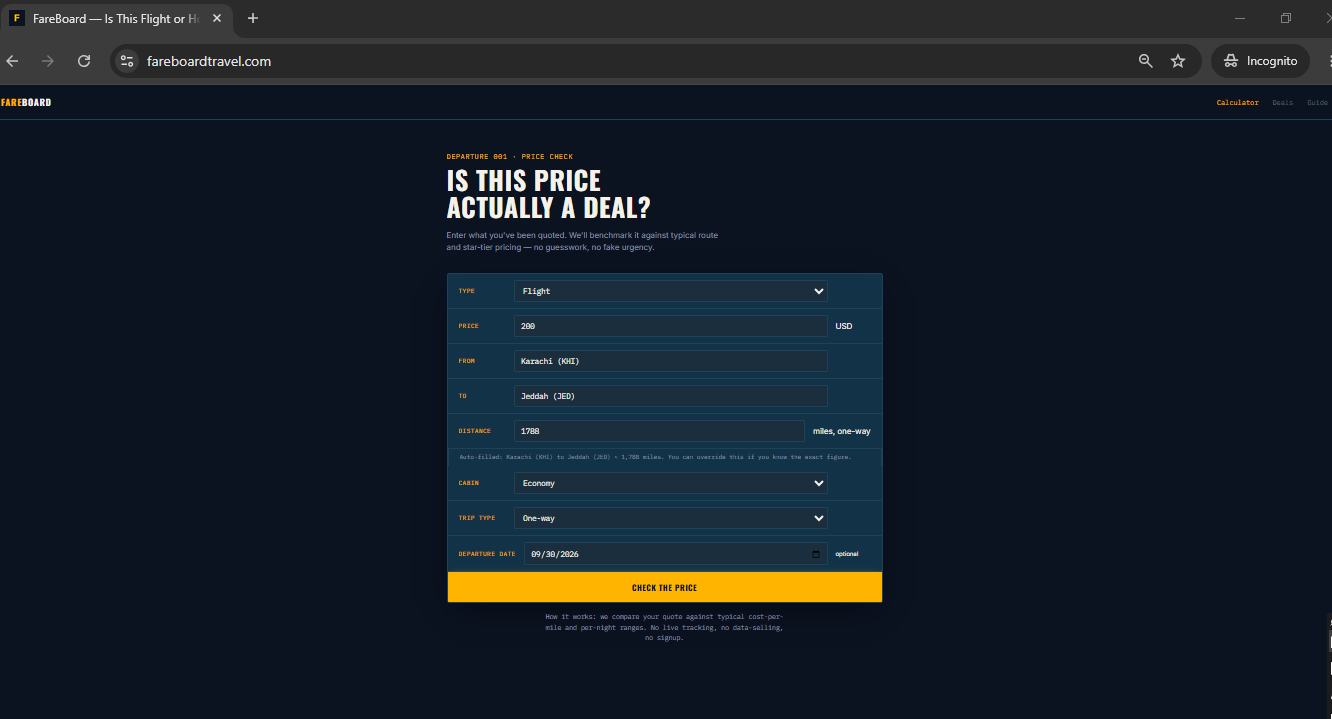
Karachi → Jeddah, $200 one-way, quoted price entered into the calculator. Takes about fifteen seconds.
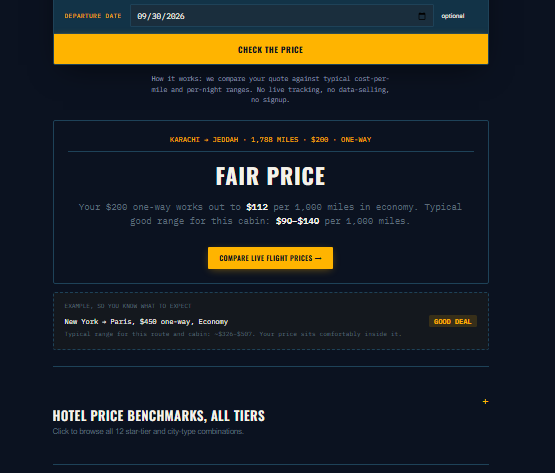
Fair Price. $200 works out to $112 per 1,000 miles — inside the normal $90–$140 range for economy on this route. Nothing to second-guess here.
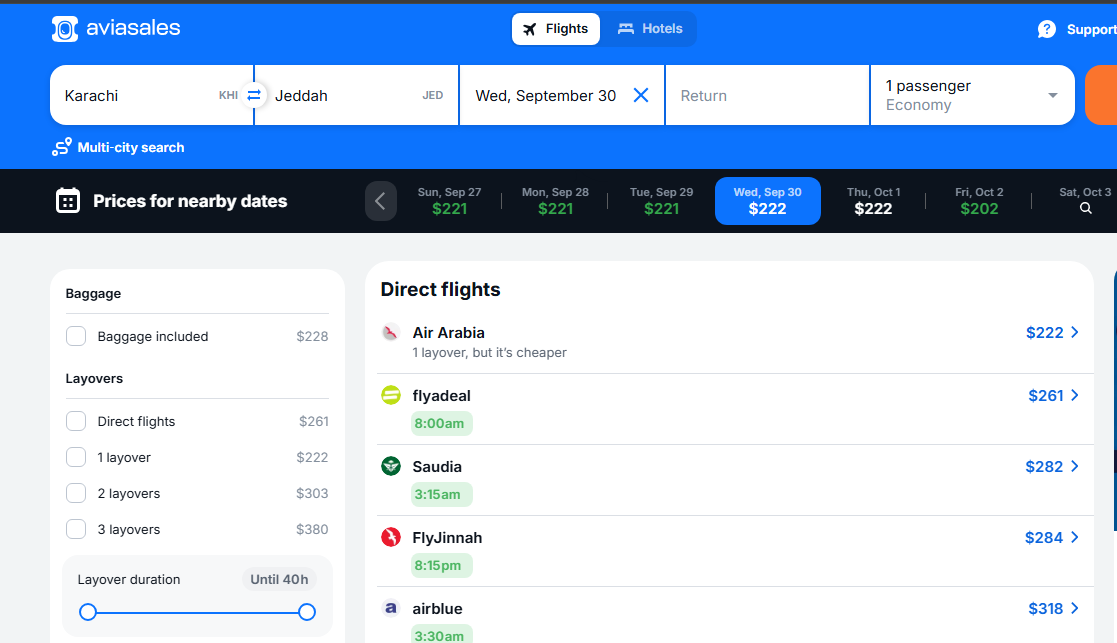
"Compare Live Flight Prices" lands you straight on real search results for the same route and date — no re-typing anything.
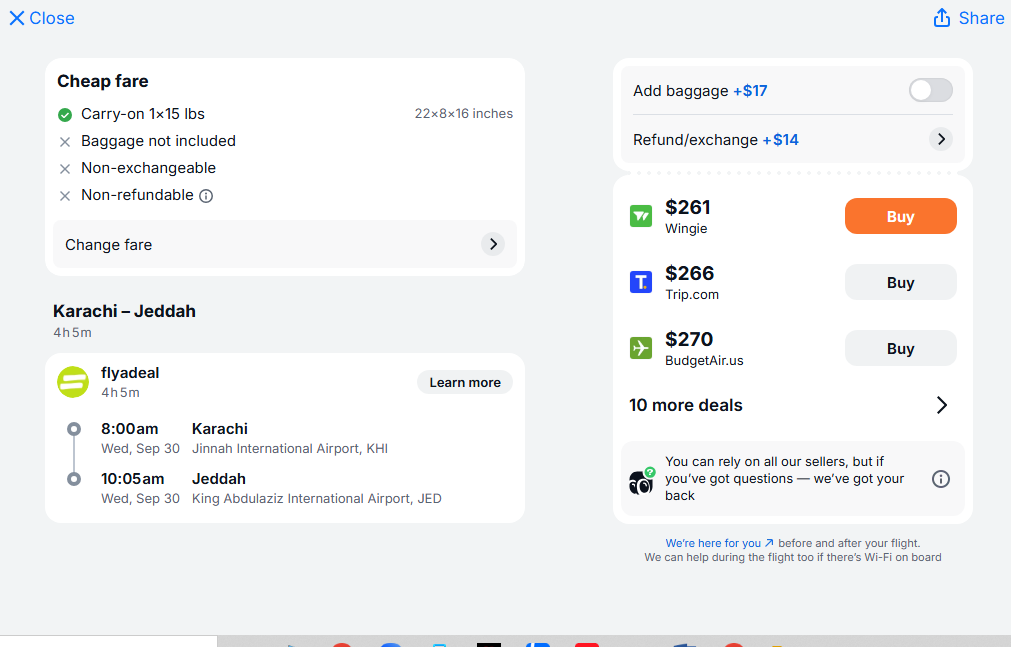
The exact same flyadeal flight, sold by three different resellers: Wingie at $261, Trip.com at $266, BudgetAir.us at $270. Same seats, same times — worth checking which reseller before assuming the first result is the best one.
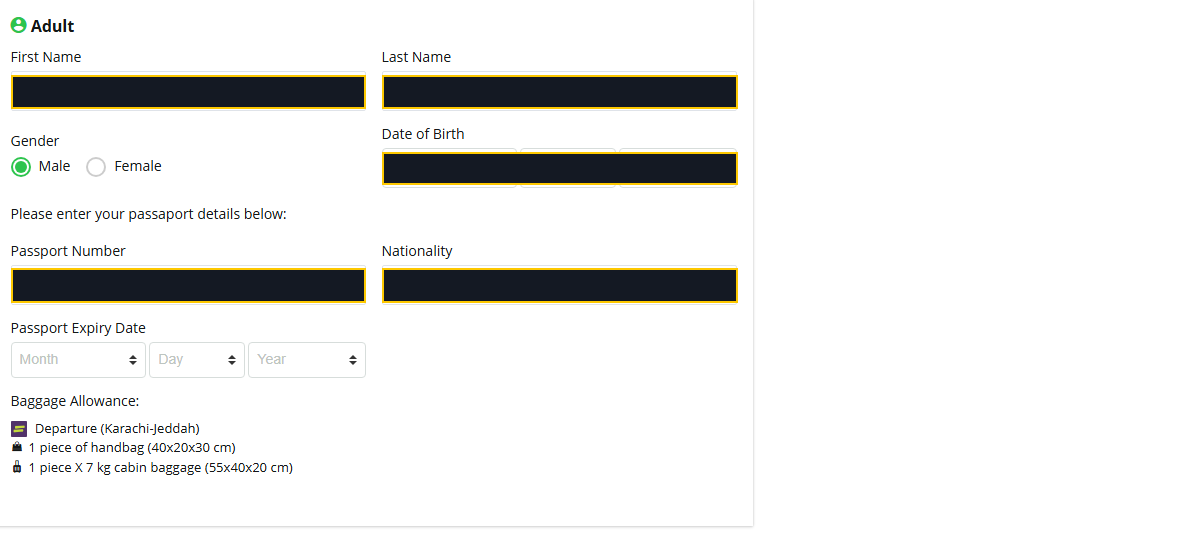
Name, date of birth, and passport details — standard for any international booking, on any site. (Fields blanked out here since this is a live demo, not a real booking.)
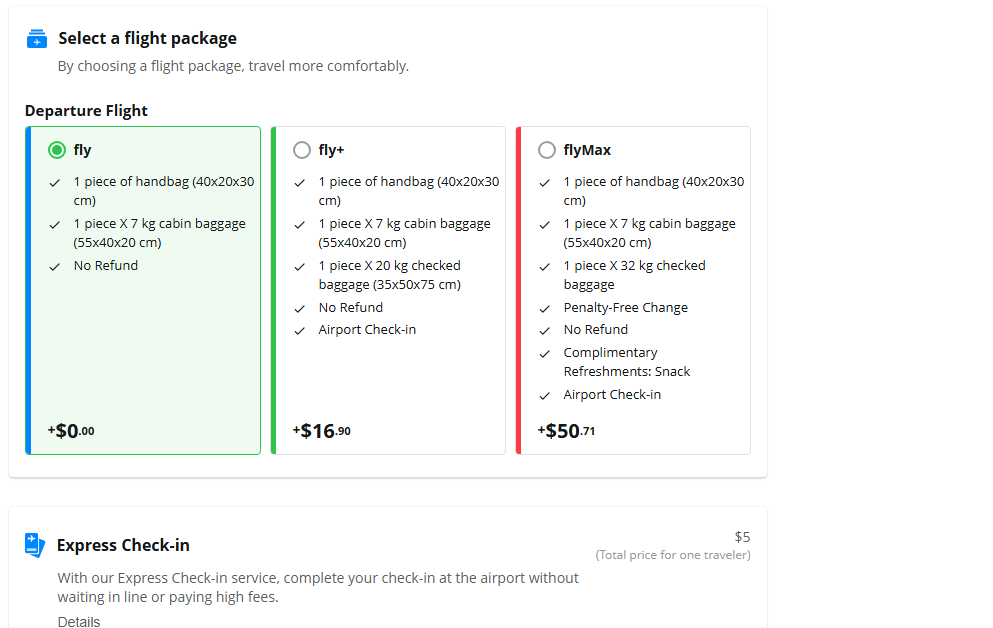
Three fare "packages" appear: the base fare, +$16.90 for a checked bag and free changes, or +$50.71 for the fully flexible tier. Not a scam — just worth reading before tapping the pre-selected middle option out of habit.
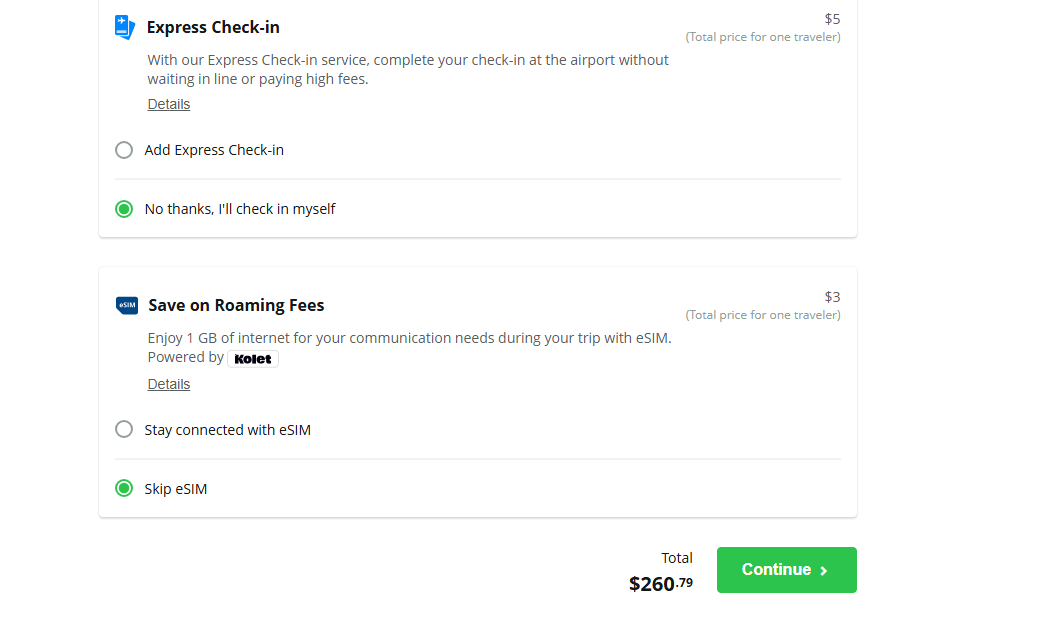
Express check-in ($5) and a travel eSIM ($3). Both declined here — both easy to say no to without missing anything essential.
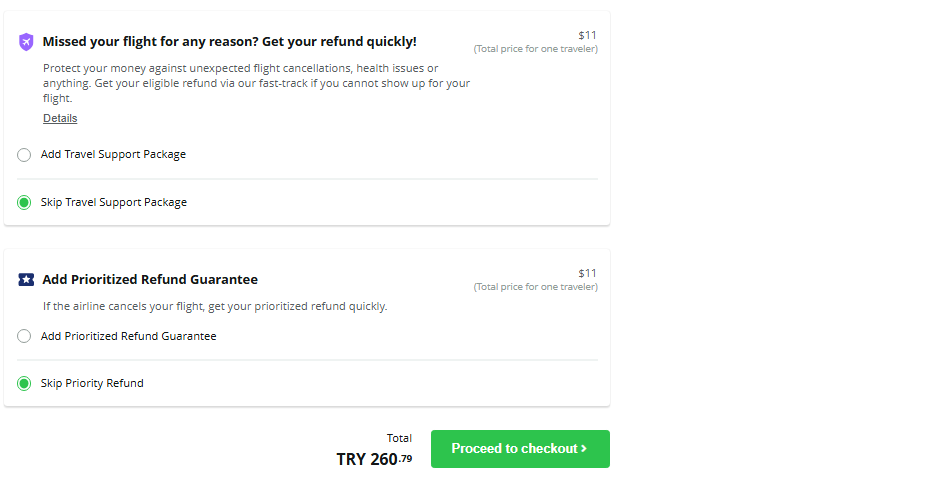
Phone support tiers, travel medical insurance ($4), a "missed flight refund" package ($11), and a "prioritized refund guarantee" ($11) — all separate screens, all optional, all declined in this walkthrough.
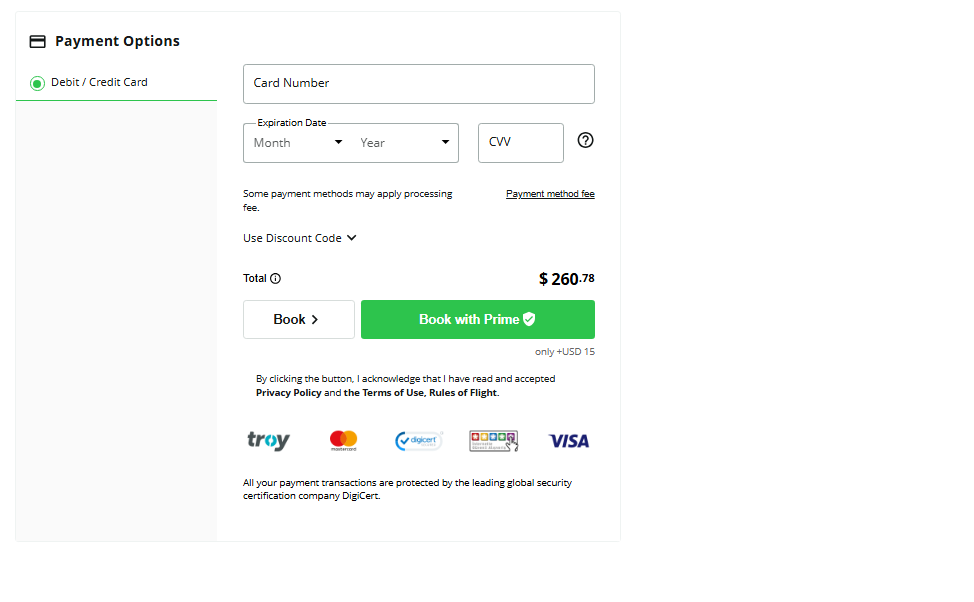
Card details, nothing entered. Total: $260.79 — almost exactly the $261 fare we started with, because every optional add-on along the way was declined.
Say yes to everything offered along the way — the top fare package (+$50.71) plus every add-on (+$49 combined) — and that same $261 flight becomes $360.71 before you've even reached checkout. Say no to all of it, like this walkthrough did, and you land almost exactly on the price you started with.
None of this is unique to one airline or one reseller — it's how most booking flows work. The point of checking your price first isn't to avoid every add-on, some are genuinely worth it. It's knowing your baseline before the upsells start, so you can tell the difference between a useful option and a nudge.